2027 Rates: What's Driving Costs and How VEC is Responding
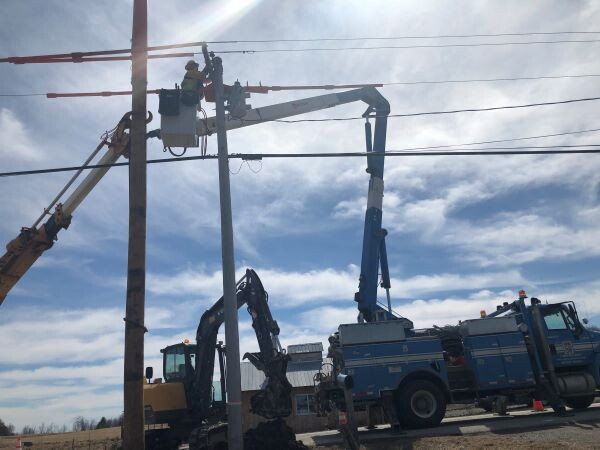
Since our first poles were set in 1938, VEC's mission has remained remarkably consistent: provide safe, reliable, affordable and sustainable energy to our members.
How we accomplish that has changed considerably. Today we are navigating rising power and transmission costs, higher interest rates, increasingly expensive equipment and materials, changing energy markets, and the need to continue investing in the electric system our members depend on every day. Finding the right balance among all of those pressures is not easy.
On November 13, VEC asked our regulators to approve an 8.4 percent rate increase effective January 1, 2027.
We know that is difficult news. Our communities are experiencing higher costs in many areas, from groceries to gasoline to home heating. As we developed our 2027 budget, we worked hard to find savings where we could and make sure the investments we are making today will serve our commitment to you over the long term.
Where are the increases coming from?
Three areas account for much of the pressure on our 2027 budget.
- Power supply and transmission. Over 60 percent of VECs budget is the cost of buying and delivering power to the VEC system. Our rate increase request includes $3.3 million in increased costs for power and transmission.
- Interest rates. Like most electric utilities, we borrow money to pay for long-term investments in poles, wires, substations and other infrastructure. More than half of our funding comes from borrowing, so higher interest rates have a significant impact on our costs. We expect borrowing costs to increase by over $1 million in 2027.
- Operating the co-op. The costs of salaries, employee health care, technology including cybersecurity, property taxes, and other day-to-day operations continue to rise as well, and will increase about $1.1 million next year.
Reducing peak power for savings
We are continually seeking ways to contain costs and be smart stewards for our members.
One important strategy is reducing the amount of electricity VEC uses during the highest-demand hours on the New England electric grid. A significant portion of our transmission costs is based on how much electricity our members are using during the single hour when New England's demand is highest, which makes avoiding usage during that peak hour valuable.
VEC already uses two utility-scale batteries to reduce our demand during peak periods. Members help through our voluntary Beat the Peak program, and by allowing us to manage their home batteries or electric vehicle chargers during peak times. These programs allow us to use stored energy or reduce demand when electricity and transmission costs are particularly high.
In 2027, a new 5MW utility-scale battery in South Hero will be added to our demand reduction resources. As transmission costs continue to rise across New England, investments like this can help us mitigate those anticipated cost increases.
Savings in everyday work
Sometimes saving money is about finding a smarter way to do something we have done for decades. Every year, for example, we inspect a portion of the thousands of wood poles across our system. Traditionally, when a pole nears the end of its useful life, we replace it. We have recently begun using a product that allows us to reinforce some poles instead, safely extending their lives by up to 10 years and delaying the cost of replacement.
In 2027, VEC plans to pilot an internal drone program. During storms, drones could help us assess damage in remote areas before employees enter difficult or potentially hazardous terrain. In Winter Storm Elliott one road required days of tree clearing before we could get access to the damaged equipment, only to then also find several broken poles. Drones could help us speed up the restoration process and reduce inspection time for other tasks, too, such as routine vegetation management.
These small changes are one of the ways we think about affordability: keep looking, keep learning, and keep seeking efficiencies and savings.
Leaning in to grant dollars
We are also aggressively pursuing grants so that our members do not have to bear the full cost of necessary investments. In recent years, grants have provided extensive value to VEC through strengthening lines, improving storm resiliency, and modernizing technology.
For 2027 and beyond, we have several anticipated grants including $460,000 for storm response and Emerald Ash Borer mitigation. We have three construction projects which benefit from $1.3 million in FEMA hazard mitigation grants. We are also finalizing $4.45 million in federal funding for our meter upgrade project to support that project over the next three years.
Looking ahead for clean, flexible power
Our members have told us they value a clean power supply, and VEC has maintained a carbon-free power portfolio since 2023. At the same time, Vermont law increasingly dictates how much renewable energy we purchase and specific characteristics of that energy such as location and year it was built. Beginning in 2030, those requirements would mean purchasing additional renewable energy credits for approximately 13 percent of our power that comes through our long-term Seabrook nuclear contract.
We believe maintaining a clean power supply and keeping electricity affordable should go hand in hand. We will continue advocating for greater flexibility to pursue least-cost power supply options, including carbon-free nuclear power, while keeping our commitment to a clean power portfolio.
We recognize that any rate increase is unwelcome news, and we know it will have an impact on our members. We remain firmly committed to controlling costs, investing thoughtfully, and using the creativity and knowledge of our VEC team to limit the impact wherever we can. Our responsibility remains what it has been for nearly 89 years: providing safe, reliable, affordable and sustainable energy to you for the long term.