Out of the Woods: How VEC Brings Lines to Roadside to Boost Reliability
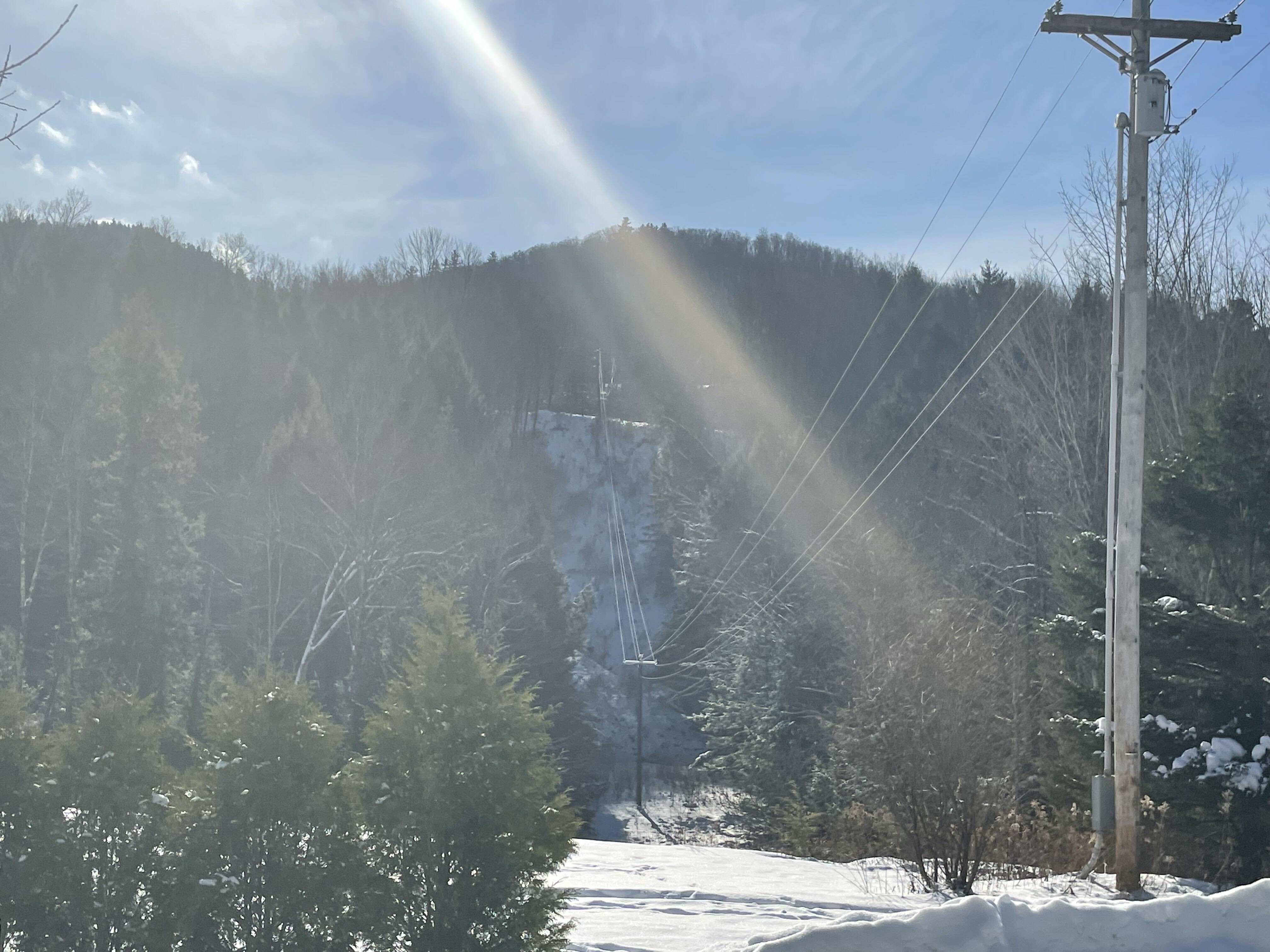
We all love our trees, don’t we? Spruce, fir, maple, birch, poplar, and pine – the colors, the smells, the shade. What we may not love so much is the way trees interact with the electrical system. These limbs, branches, trunks – with some wind or wet snow can be a big problem. Power down. Lights out.
To keep the lights on, a key strategy for VEC involves cutting and trimming trees near our lines before they become a threat. Simply put, keeping trees away from lines.
But we have another approach, too: keeping lines away from trees. Over the past several years, VEC has accelerated efforts to reduce the risks of power outages and one of the key strategies is making investments to move lines from the woods out to roadside or even underground.
So far, statistics show that this kind of work is making a difference in outages. For example, a line in a forested-right-of way in Fletcher had experienced three separate outage events in the 12 months before the line was moved and improved. In the 12 months since, there have not been any outage events on that line. Other projects involving moving lines to roadside have shown a 75 percent reduction in the number of outages and a drop in the amount of time members are out of power when there are outages.
“Line relocation is a situationally useful tool,” said VEC Right-of-Way-Associate Beth Vaughn. “It’s not possible to bring every line to the road, but we evaluate specific relocation projects by considering what it will cost, how long it will take, and its value to the membership as a whole.” In fact, VEC uses a detailed matrix to evaluate and prioritize prospective projects.
Generally, one relocation project is done in each of VEC’s four districts every year.
Big Changes over Time
Since VEC’s lines were strung across the territory decades ago, two things have happened. Lots of formerly open agricultural land has become forest and electricity has evolved from a luxury to a necessity. The need for reliable power has only increased as Vermonters rely on electricity to work from home, attend school, hold telehealth appointments, power their cars, and heat their homes. Yet over the same time-period, winter storms have intensified across the state, worsening seasonal damage and creating more severe outage events. These factors point to the same solution: investing in a resilient grid. Roadside relocation projects are one of VEC's strongest tools for doing just that.
Here are four recent/current projects that VEC’s undertaken to improve reliability by moving lines to roadside within the Johnson district service territory; many other projects like these are happening in parallel across our three other line districts. Each of these projects involves a significant amount of planning and permitting, often years' worth, before construction can begin.
- Fletcher (Metcalf Pond Road) – In 2023, VEC relocated about a mile section of old overhead conductor from a very difficult-to-access swamp to the road. The old conductor was “#6 Steel, some of the oldest on VEC’s system – known for being extremely brittle and only able to carry a small amount of electricity. VEC crews can’t safely work on this wire while energized due to its tendency to break while being handled. That meant that VEC would need to de-energize the line whenever even simple maintenance needed to be performed. The new, roadside line was constructed using taller, stronger poles and larger, insulated aluminum wire – capable of significantly more electricity and able to keep the lights on even with a tree or limb in contact with the conductor.
- Fletcher (Bakersfield Road) – In a project that’s very similar to the Metcalf Pond Road project, VEC relocated another mile of old, offroad “#6 Steel” overhead conductor to the road in 2025. The previous right-of-way was a difficult-to-access, steep, ledge side bank, which in some places couldn’t be reached by off-road equipment. The line was prone to damage from tall white pine trees growing further uphill, which tended to fall from a height down onto the line. The new right-of-way is roadside, easily accessible at all times of year, and is designed to minimize the risk of tree-related damage and significantly reducing time for repairs, if needed.
- Waterville (Smithville Road) – Slated for 2026, this project relocates approximately three quarters of a mile of offroad overhead conductor from a swampy, hard-to-access riverbed where several poles are in danger of being washed out. The existing line has several very long spans that are prone to slapping together during wind events, causing outages. The new line will be roadside and underground, eliminating the threat from trees along this section, while also being capable of handling more electric current. Installation of the new underground line will use directional drilling to minimize disturbance to landowners and wetlands impacts.
- Jericho (Nashville Road) – An upcoming line relocation project targeted for 2027, this project is supported by Federal FEMA Hazard mitigation funding. It will relocate approximately 1.25 miles of 3-phase line and an additional one mile of single-phase line from heavily wooded, offroad areas to the road using a combination of new overhead and new underground lines. A portion of the existing 3-phase line traverses a deep gully that is extremely challenging for crews to access. Furthermore, this line affects a large number of members downstream of this section every time the power goes out.
How Long Does it Take?
If all elements of a project fall into place, moving a line to roadside takes two to three years from start to finish. Once a location is identified, VEC designs the changes, and then contacts landowners along the affected route. There are environmental permits to obtain from state and federal agencies, as well as easements and licenses which allow VEC to maintain the new lines into the future.
Our efforts to strategically improve the resilience of our system by moving lines is something we are constantly planning, and doing so in a way that’s financially prudent for the Co-op.
Any benefit we can add to the system through investments in resilience, whether it’s for a neighborhood, even for just one individual, benefits all coop members because over the long haul it will reduce costs of repairs and upgrades.
What About Underground?
Relocating lines underground has become an increasingly useful and popular tool in improving reliability for VEC Members. Underground construction is typically more expensive up front but can offer large savings over the entire life of the line due to reduced vegetation management costs and minimized impacts from storm events – particularly in heavily wooded areas. Underground construction, especially when installed via directional boring, can also help VEC minimize impacts and navigate the easement and wetland permitting process. Soil conditions, like ledge for example, can sometimes make underground construction impractical. Locations and quantities of existing member services also need to be considered as the cost-effectiveness of overhead versus underground relocations are reviewed.